top of page

Updated: Oct 26, 2023


Left: Mom (Lindi Vilakazi) Right: Dad (Solomon Mavhungu)

Although colourism is something that a lot of South Africans do not want to talk about, it is prevalent in our communities. What we see on social media reflects that. Colourism is when there is a favour for those who are light-skinned and they are treated better than their dark counterparts. Oftentimes we see it when a baby is born and how people treat children with light skin compared to children with dark skin. Light skin is something that black people in South Africa fetishise and when you are lighter in complexion, you are automatically seen as attractive, therefore more privileges and better treatment. I learned this at an unfortunate young age when I witnessed how people spoke of my mother and how men would go out of their way to do kind gestures for her without her even asking.


Baby Siphiwe

Because my father is dark-skinned, some people thought he got with my mother because he wanted cute children. When I look at our baby photos, we were all light-skinned and then as toddlers, we got darker in complexion, and thus uglier. Every time I was out with my mother, I would notice how many people stared at her and how genuinely gorgeous she was. Even in death, people still remember her for her light skin and beauty. Sometimes, she would tell me stories and one that I vividly remember is when my mother’s oldest son was born, he was dark in complexion and the nurses could not believe that she, a light-skinned woman, gave birth to a dark-skinned baby. She went on to say that the nurses were gushing about how beautiful she was while they demonised my brother and how hushed their voices were when they spoke about how she gave birth to a hideous creature. “They kept saying it was impossible,” she said. I looked at her face to see if this bothered her and she just chuckled and shook her head in disbelief.


8-Year Old Siphiwe Seen As Ugly

At around the age of eight, I had a best friend who was light in complexion. She got a lot of attention. Some people would say that she looked like she could be my mother’s daughter. This made me feel inadequate as my mother’s only daughter. Because no matter how rough I would scrub my skin or how much soap I used, I could not get any lighter. I did not feel worthy enough to be my mother’s daughter. How dare I come out of a beautiful and light-skinned mother and choose to be darker in complexion? How dare I not be light and beautiful? Although my mother would tell me I was beautiful after she had done my hair or when I wore new clothes, I still felt like I was not beautiful enough. As a result, I silently swore to be known as the smartest girl in our neighbourhood. I spent hours in the library teaching myself how to read and write in English in second grade. When my mother would sit and watch my younger brother and I do homework, I would always be proud to show her the sticker I earned because I got all the answers right and how I would join spelling competitions and always came first place. I felt somewhat adequate when I got attention from my teachers and when my mother acknowledged how smart I was. This was the beginning of my people-pleasing phase. I envied the attention my friend was getting and since she was known for being pretty, I learned to settle for being known as smart instead.


13-Year Old Siphiwe With A Low Self-Esteem

Now that I have grown up and have gotten lighter in complexion, I noticed an increase in compliments and I’ve had people try to stop me just to tell me I was beautiful. Whenever I would go and visit my mother’s side of the family, I was often told how I looked exactly like her and that one of my mother’s relatives felt the need to point out that I used to be ugly when I was younger and I looked more beautiful as time progressed. I could feel a sting in my chest when she said that because I had worked so hard to be known as smart and have other attributes and all she cared about was how I looked and the colour of my skin. There was even a time where I was going to the store to buy bread when an older man in a red Golf stopped me. He told me that I was extremely beautiful and that he recognised me. “I have asked you out before,” he looked at me like he knew me.

“I’ve never been stopped by a man in a car. I have never seen you in my whole life. I’m also just a child.” I told him. I wasn’t lying. I really hadn’t met him before.

“Whose child are you?” He looked so bamboozled and so was I. I revealed my mom’s childhood nickname and his eyes widened as though he had reached some realisation. “Oh, that’s who I asked out. She rejected me though.” This was awkward. He shook his head in disbelief. “I can’t believe I asked a mother and a child out.” I had to get him out of his deja vu. “She died.” With that, I left. I did not look back. I hated the fact that people saw me as her. It reminded me of the pain I experienced when I was younger and how often I was ignored.


Left: Mom (Lindi Vilakazi) Right: Me (Siphiwe Mavhungu)

Today, I am able to look at myself in the mirror and feel beautiful whether I have lost or gained complexion. I am able to look at pictures of my younger self and tell her that she was not ugly. My younger brother is darker than me in complexion and I have heard people tell him that his sister was better looking than he was. I couldn’t help but feel a sense of deja vu and would tell him how handsome he was and that he did not need to change anything about himself because he was enough. This is a mindset that we have to adopt as South Africans. We have to uplift our people and unlearn Eurocentric beauty standards. Your comments can make or break a person. Let’s not break each other’s spirits.


Left: Younger Brother (Solomon Jr. Mavhungu) Right: Me (Siphiwe Mavhungu)


  • Writer: SphiweC Mavhungu
    SphiweC Mavhungu
  • Sep 12, 2023
  • 3 min read

Updated: Sep 20, 2023


Food in Hair to Target Hair Growth
Photo by @ChristianAssembly_ (Pinterest)

There was a time around 2017 when the movement of "food in hair" started filling YouTube algorithms. This was mainly in the black community. YouTube creators targeted the black community since we are known to be "bald-headed" or a population that does not grow hair easily, like other races. Content creators with long hair carried the burden of having to explain to their viewers why their hair was so long and how they maintained it. This was a dark period for me because I had cut my hair and it was growing too slow. I kept searching for remedies and different ways one could grow long hair. When I went on YouTube and a black creator with long hair started speaking, my ears perked up with a notebook in hand.


Screenshot of Rice Water Trend on YouTube

The first food remedy for hair growth I encountered was rice water. I used it religiously for weeks, however my hair remained the same length. I got frustrated because why were other people's hair growing with this food remedy and my hair wasn't? Firstly, I have to say that the stench that came with having rice water on your scalp was horrendous. It was worse that I did not know what I was doing. I looked at myself in the mirror and tried so hard to see a difference and even convinced myself that my hair had grown a centimeter overnight. I laugh at this today because of how gullible and naïve I was. That was the power of social media. It could convince you to do the most outrageous thing and you would be convinced that it works. Because why is the influencer's hair growing and mine wasn't? It had to grow somehow. Even if it was at a slower pace. This shows that social media influences young minds easily and because a young teenager who has access to YouTube is not going to do their own research and figure out if this remedy is good for the hair or if it is just a waste of time. In my mind, as long as I saw the hair growth on the influencer's head, there was no point in doing research. Genetics were not even a thought that crossed my mind.


"Hair" spelled with rice and sprinkled with some water
Photo by Siphiwe Mavhungu

My naivety did not end with rice water. There were also hair masks that were introduced, or rather popularised by celebrities such as Cardi B. Cardi B is known to have long and healthy hair beneath the wigs we usually see her in. I got influenced into making a hair mask that contained eggs, mayonnaise, virgin olive oil, avocado and other things I could find. The second I put that hair ask in my hair and let it sit for an hour as instructed, I could not stand the smell and food being in my hair. It was after I had washed my hair and saw no difference in my hair. I was exhausted and annoyed. I decided to do my research after realising that these remedies were myths, at least in my eyes based on my non-growing hair as evidence.


Cardi B
Photo from Buzzfeed

Despite all that has happened and the black hair community, I think that we are moving away from using food in our hair instead of products that were created for our hair. It seems as though people are now following the Indian hair care routine, as they are known for shiny, think and rich hair. After all my efforts went to waste, I began using water and oils for my scalp. I realised that the less stuff I put in my hair, the more it grew. I later decided to do dreadlocks because I was tired of having to maintain my hair and it was costly. With locs and my method of hydrating my hair with water and then seal the moisture with oil, my hair grew quicker. In less than two months, my hair had grown about two inches long. I am happy to say that my hair down my back, just above bra-length.


DNA
Photo from Unsplash


I will conclude this blog by stating what I have learned through my hair journey. Your hair is not the same as another person's and genetics play a huge role in how long our hair grows. We also have to give credit to how we maintain the hair and keep a consistent routine that works for your hair. People on social media know the influence they have on young and impressionable minds. Let us take time to listen or learn the needs of hair and not have strangers on the internet tell you about the hair that grows from your scalp. Overall, I have learned a lot about my hair during the "food in hair" era and I can proudly say that that phase of my life is over and I hope more people learn about their own hair and do what works for them.


  • Writer: SphiweC Mavhungu
    SphiweC Mavhungu
  • Jul 23, 2023
  • 3 min read


Solomon Jr. Mavhungu Using Sunscreen on a Hot Day (Photo: Siphiwe Mavhungu, 2023)

In an era of skincare and climate change, social media is buzzing with talks of sunscreen and lotions with SPF to protect the skin from the harmful rays of the sun. Although sunscreen can be seen as a necessity, it is important to note that it is expensive. The more SPF is in the sunscreen means more protection from the sun's heat and thus more expensive. Looking at the state of the socio-economic issues among majority of the population, it may be hard to have access to things such as sunscreens. The average South African can barely afford groceries for an entire month so South Africans living under the poverty line do not have the luxury of even thinking about sunscreen.


Tissue Oil Used by My Mother


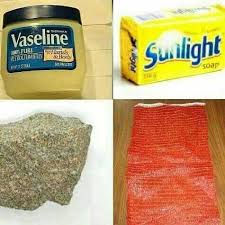
It is important to note that there has been an increase in skin cancer due to climate change. Social media, television broadcasts and many other media are advocating for the use of sunscreen as skin cancer can happen to anyone, even those with melanin. Growing up in rural Limpopo, we always ran barefoot in the sun as children. The scorching heat did not bother us. All we did was play outside and then go inside the house to drink water and then we were out again. My point is that although the use of sunscreen is important, there are communities that do not even know that sunscreen exists. I remember when I was five years old, the only skincare products I knew were the Sunlight green bar soap, Vaseline, Glycerin where I would dip my finger in and the sweetness would awaken my mischief, as well as tissue oil that stayed in the box it was bought in. I never understood why mother used it. I just knew she loved it.


My Childhood Skincare Routine

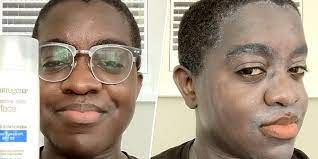
Although I do not necessarily use these products anymore since leaving Limpopo and living in Johannesburg due to my father getting a better job, I understand that there are people who are still using these products and believe that they work well for their skin. This leads me to a myth that we, as black people (myself included), used to believe that black people were immune to sunburn or skin cancer because the melanin in our skin was made to protect us from the sun's heat. A lot of us thought that it was white and light-skinned people who were at risk of skin cancer. When sunscreens started being advertised on South African televisions, it was always modeled by a white person, which fed into the myth. I vividly remember the first time someone handed me a sunscreen before our swimming classes. I did not understand what I was supposed to do with it. I looked at my fellow black classmates who were turning dark blue-purplish due to the white cast. I asked our PE teacher if it was necessary and she nodded before telling my classmates to jump into the pool.


Sunscreen White Cast on a Black Person (Google Search)

Although I own a sunscreen now as adult, one that does not leave a white cast, I consider myself privileged. In a country like South Africa, where people can barely put food on the table, owning a sunscreen is a luxury. The prices of sunscreens are so expensive which means that people have to prioritise their needs in a way that works for them and most people are obviously going to choose food and water over sunscreen. If you go into stores, you will notice that the sunscreen section is always full and the bread aisles are empty. Although social media makes sunscreen look like a great necessity and has proven to protect people from the harmful rays of the sun, it is something people can live without. I believe that if we want to prioritise needs, we need to think of people who are barely making enough to survive as food prices are getting inflated every few months. Because of this, I believe that sunscreen is a necessity to those who can afford it.


bottom of page